First, we determine whether conversion is realistically possible
We review the location, zoning classification, road access, and surrounding environment, then organize and explain the options currently available.

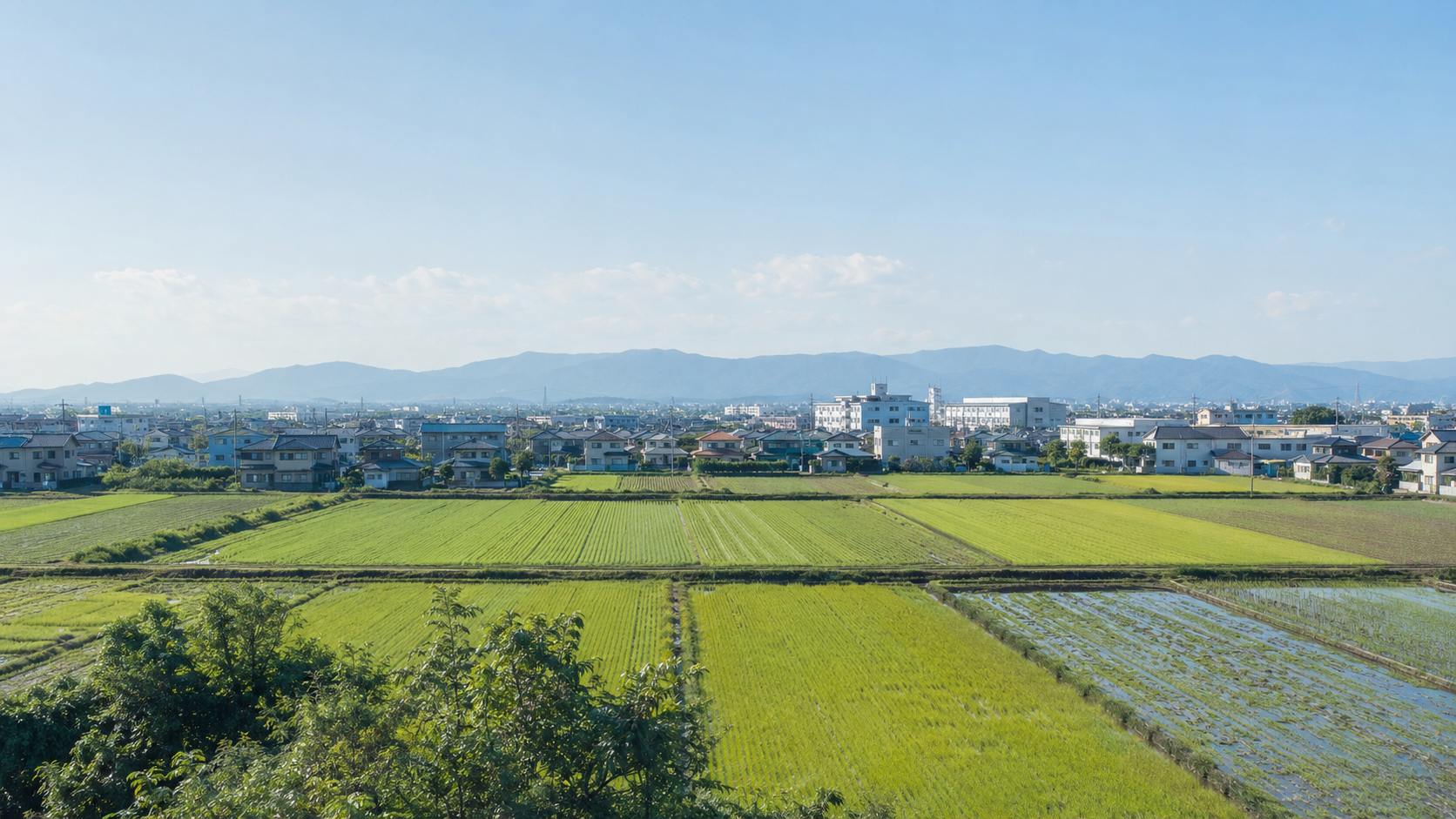
AGRICULTURAL LAND CONVERSION
BUSINESS 01
Have you inherited farmland you cannot use and kept paying fixed asset tax on it?
Leaving farmland unused still comes with responsibilities for cultivation or proper management, as well as ongoing tax obligations. Depending on the land conditions, however, conversion for residential lots, parking, or business use may be possible. Drawing on practical experience with complex cases, including land in Urbanization Control Areas, we carefully assess the potential of each property.
CONSULTATION Discuss Your LandINTRODUCTION
About Agricultural Land Conversion
Converting farmland into residential, commercial, or parking use requires permission or notification under Japan’s Agricultural Land Act.
The required procedures and feasibility vary depending on the location, zoning, surroundings, road access, and the intended use after conversion.
Rerise Co., Ltd. is more than a procedural point of contact. We look beyond obtaining approval, planning with the actual post-conversion use of the land in mind.
We review the location, zoning classification, road access, and surrounding environment, then organize and explain the options currently available.
We handle coordination with public authorities and stakeholders, document review, and collaboration with specialists through a single point of contact.
We plan with post-conversion use and construction in mind, so the land can become genuinely usable.
LAND MANAGEMENT RISK
Even if you have no immediate plans to use the land, understanding its conditions early helps preserve more options for the future.
Even when the land is not being cultivated, proper management may still be required, including weed control and consideration for the surrounding environment.
Depending on how the land is used and treated administratively, agricultural land regulations and tax obligations may need to be reviewed.
When you eventually consider selling or converting the land, zoning classifications or road-access conditions may become obstacles.
LAND CHECK
Four Points to Check About Your Farmland
Start by checking these basic conditions.
Urbanization Promotion Area / Urbanization Control Area / Not sure
Yes / No / Not sure
Residential / Parking / Business use / Not decided
In cultivation / Partly idle / Not in use
These answers alone are not enough to determine whether conversion is possible. We review the land location and specific conditions before assessing the possibilities for your case.
Discuss Your Land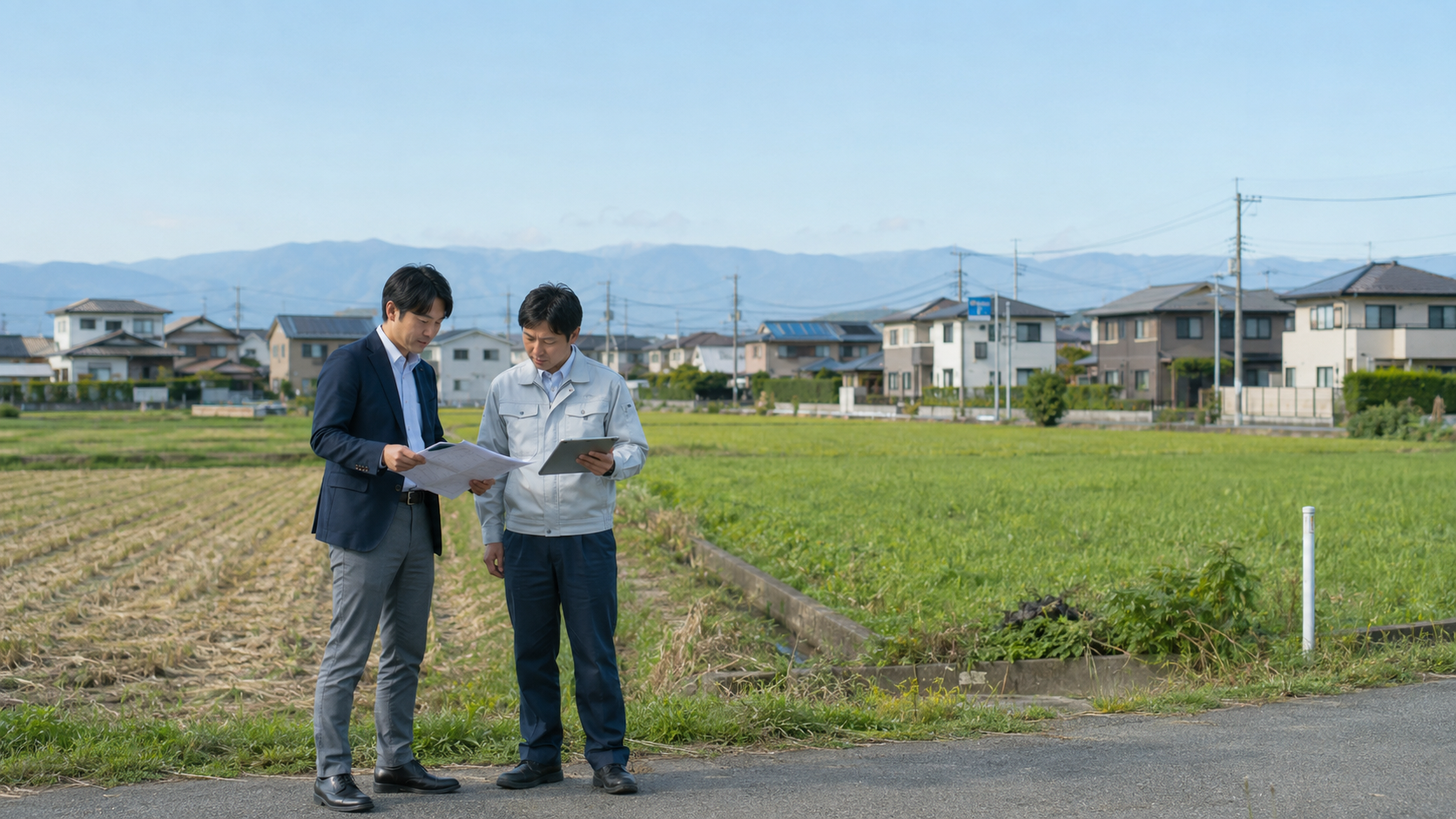
Every agricultural land conversion case comes with different conditions.
Relying only on documents can lead to unexpected issues later in the process.
We review the land shape, road access, and relationship to nearby properties and facilities to determine whether the intended post-conversion use is truly practical.
Location, area, and land category
Urbanization Promotion / Control Area classification
Road access and surrounding roads
Relationship to nearby homes and facilities
Planned use after conversion

The permits and authorities involved differ depending on the conversion plan.
You do not need to repeat the same explanation to multiple specialists. Rerise serves as the central point of contact, coordinating required documents and discussions with relevant authorities.
Depending on the case, we work with administrative scriveners, land and house surveyors, judicial scriveners, and others, coordinating permits, surveys, and registration in an integrated process.
Organizing required documents and application details
Pre-consultation with agricultural committees and public authorities
Reviewing the land-use plan
Coordination with survey and registration specialists
Progress management through approval
OUR STORY
Representative Director / CEO Shingo Araki
We have received many inquiries from people who inherited farmland, did not know how to use it, and continued paying fixed asset tax year after year. Those conversations are part of what led us here.
My own experience was the starting point. While running a business, I once approached a neighboring farmland owner to ask whether they would consider transferring the land to us. I was told, “It is farmland, so I cannot transfer it. The procedures are complicated.” The answer was no at first. But the owner also said they might consider it if conversion were possible, so I began working on my first agricultural land conversion case.
I started by finding an administrative scrivener with agricultural land conversion experience, then personally handled discussions with authorities and the agricultural committee, on-site surveys, and coordination with a land and house surveyor. I worked through each step myself.
That experience made me realize how difficult agricultural land conversion can be without practical experience and a reliable professional network. That is why we now carefully evaluate each property’s potential and work to connect approvals with actual, usable outcomes.
EXPERIENCE
Handling Complex Cases
Our representative has completed agricultural land conversions in Urbanization Control Areas in Tokyo, where approvals are considered particularly difficult, converting farmland into residential land and miscellaneous land.
Even if another company has told you the land is “too difficult,” we first review the conditions. We cannot promise approval in every case, but we explain the findings clearly rather than leaving the possibilities vague.
One example of a case we handled. Detailed parcel numbers and other identifying information are withheld for privacy.
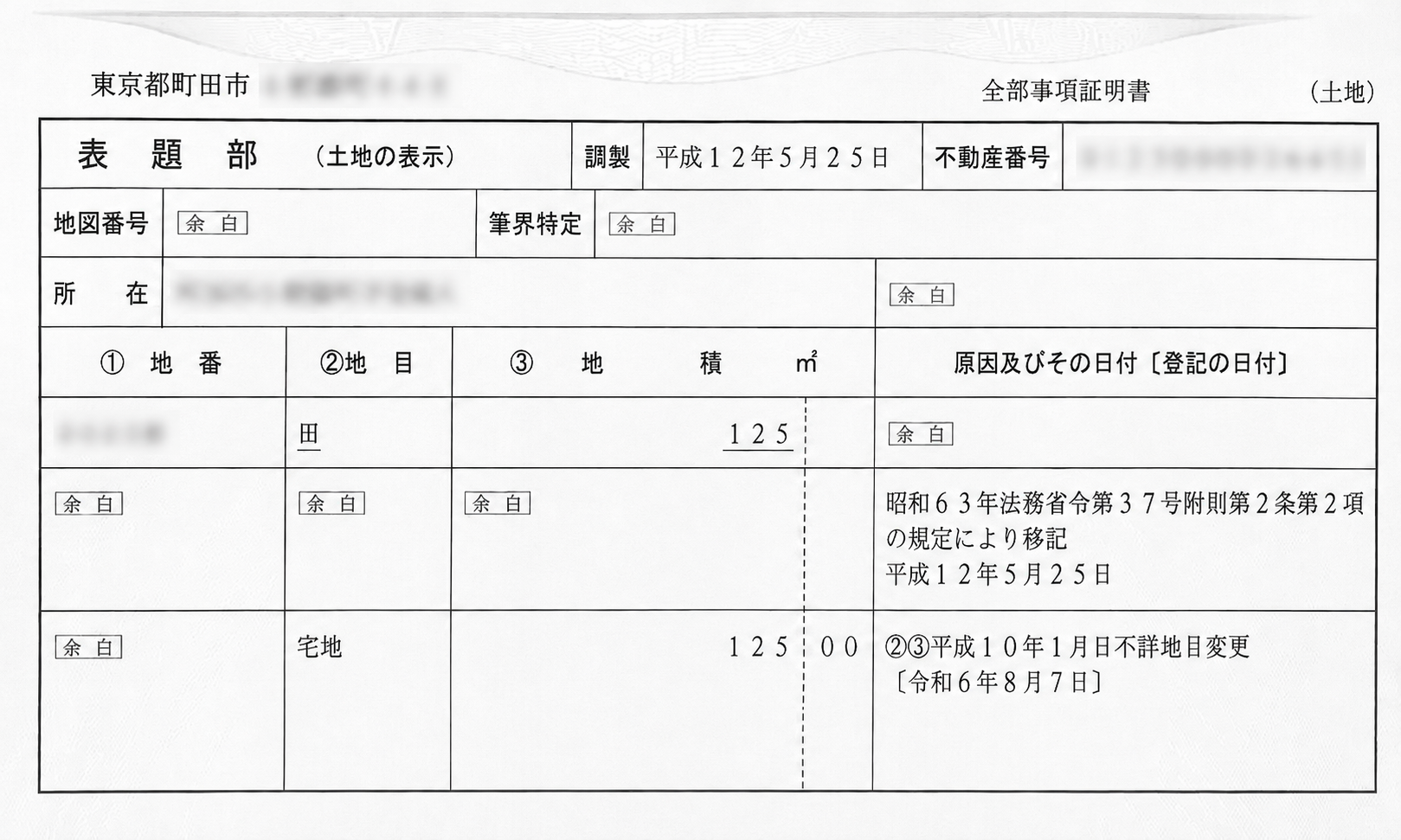
A land-category change case in Machida, Tokyo. The exact location and parcel number are withheld for privacy.

If our research indicates that conversion is difficult, we do not force the process forward. We explain the reasons and discuss possible alternatives.
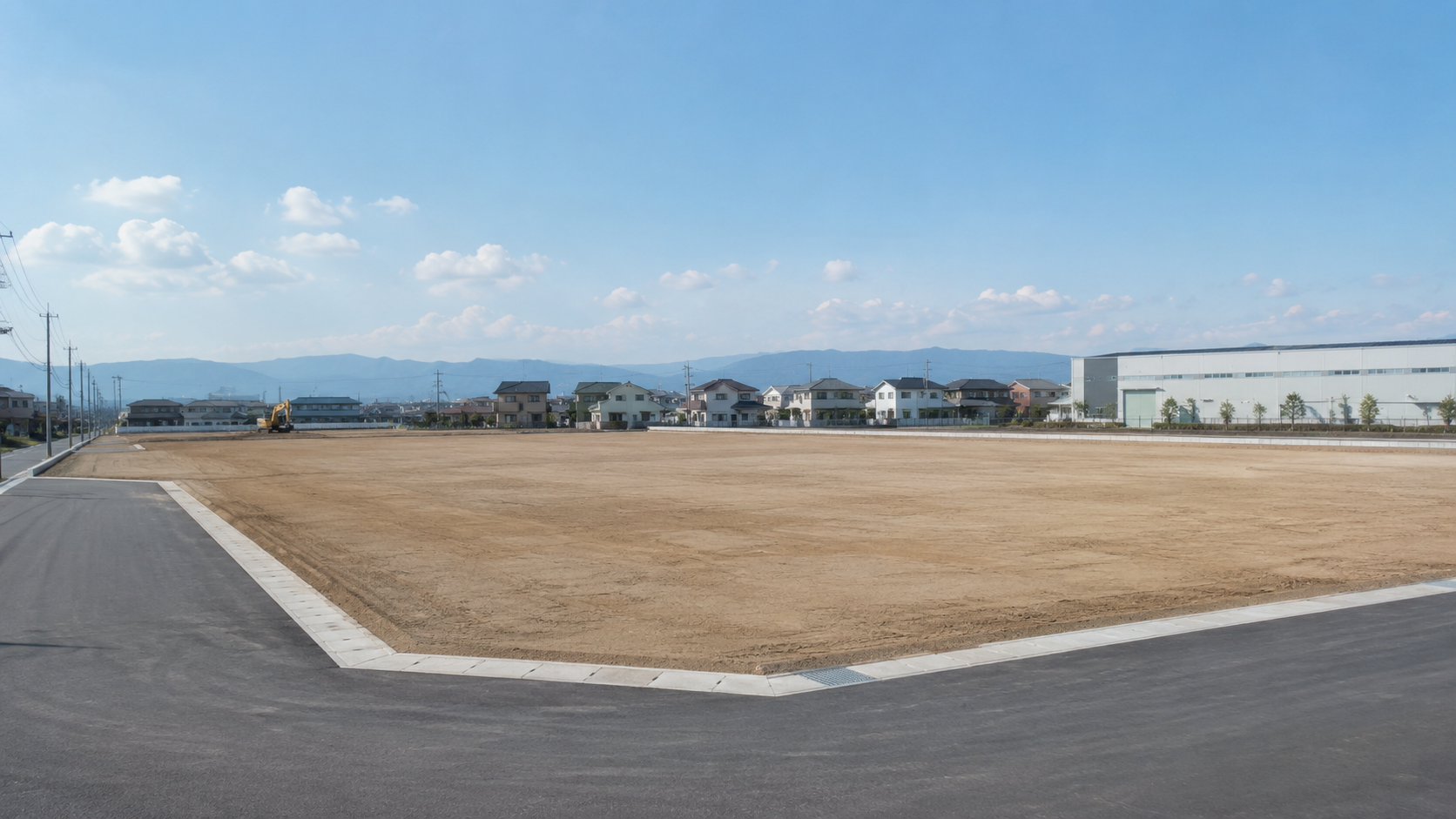
Making land genuinely usable may require grading or site preparation.
At Rerise, we plan beyond the administrative process, taking the construction required after conversion into account.
Working with our in-house First-Class Civil Engineering Construction Management Engineer, we coordinate grading, site development, paving, demolition, and related work as one plan. The goal is not simply to obtain approval, but to make the land genuinely usable.
Land grading and site development
Access road and parking development
Asphalt paving
Demolition of existing buildings and structures
Post-conversion land-use planning
SERVICE FLOW
From Consultation to Completion
Required procedures and timelines vary depending on the land and the proposed plan. Tell us what you know about the current situation.
We ask about the location and current condition of the land and how you would like to use it.
We review legal requirements and zoning classifications to assess conversion feasibility.
We explain the required procedures, expected timeline, and possible post-conversion uses.
We organize the necessary materials and proceed with consultations and applications to relevant authorities.
After approval, we proceed to site development or construction as needed.
COST
Required research, procedures, and specialist involvement vary depending on the land conditions and case details.
When you decide to proceed, we review the land conditions and scope of work and provide an approximate cost at the initial consultation. You are also welcome to contact us if you simply want a rough idea of the cost first.
Ask About Estimated CostsFAQ
Frequently Asked Questions
I am not sure whether my land can be converted.
We review the location, zoning classification, surrounding environment, and your intended use before assessing conversion feasibility.
How long does agricultural land conversion take?
It depends on the land conditions, application details, and the progress of consultations with relevant authorities. In many cases, the process from preliminary research to completion can take several months or longer.
Can I consult with you about farmland located far away?
We review the land location and case details before confirming whether we can assist. Please start by sending us the available land information.
Can you also assist with grading or construction after conversion?
Yes. Depending on the land-use plan, we can also discuss grading, development, paving, demolition, and other necessary construction work.
If I consult with you, do I have to submit an application?
No. You can review the preliminary research results first and then decide whether to proceed.
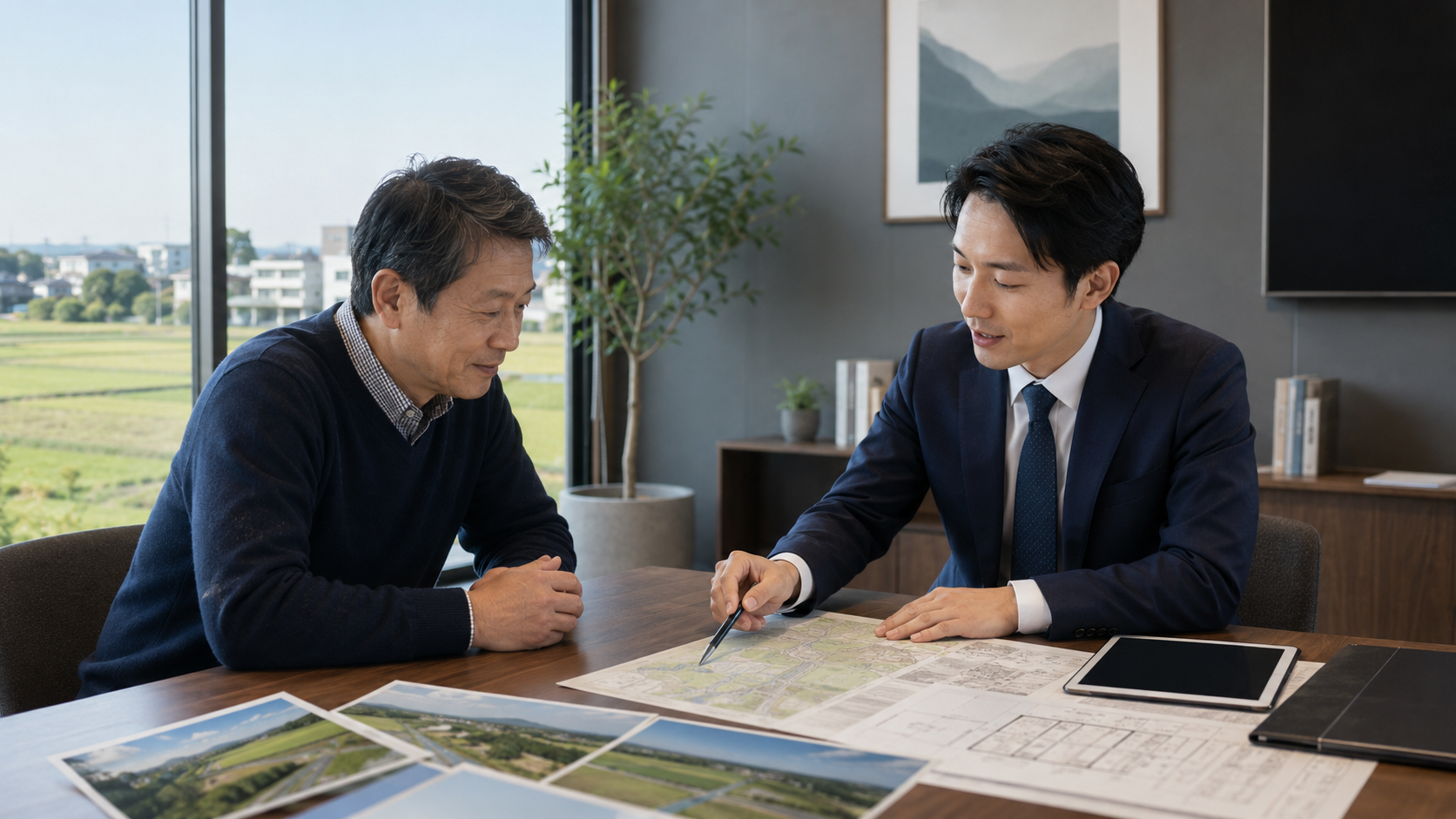
CONSULTATION
A consultation does not obligate you to proceed with any application. Tell us about the current condition of the land. We will organize the possibilities based on what can be researched.
CONTACT
A consultation does not obligate you to proceed with any application. Tell us the location and current condition of your land. We will organize the conversion possibilities, required procedures, and potential uses after conversion.
CONTACT FORM Discuss Your Land